--> EphfWq&matchtype=e">
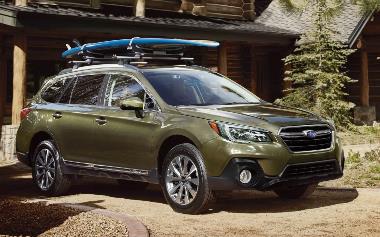
Skip to main contentSubaru’s Outback crossover enters its sixth generation with an all-new model, its first redesign since 2015. Never seen as a rugged SUV, and fittin …
Subaru’s Outback crossover enters its sixth generation with an all-new model, its first redesign since 2015. Never seen as a rugged SUV, and fitting in more as an SUV/Wagon vehicle the 2020 Outback is marketed as durable, versatile, stylish and robust.
Powering up for 2020, Outback offers a 2.4-liter turbocharged BOXER engine standard on XT trim models, balanced by a bevy of safety measures. Also onboard for 2020, are a new Hands-Free Power Gate, Tablet-style high-definition SUBARU STARLINK 11.6-inch touchscreen, standard EyeSight Driver Assist Technology with Advanced Adaptive Cruise Control with new Lane Centering function, and the debut of the Onyx Edition XT trim level with unique exterior and interior.
And Outback is loaded. My test Outback XT Limited was outfitted with the turbo engine, automatic transmission, symmetrical all-wheel drive, leather-trimmed upholstery, power tilt/sliding moonroof, SUBARU STARLINK® Multimedia, dual-zone climate control, 18-inch alloy wheels, electric power-assisted steering, 4-wheel independent raised suspension, brake assist, LED responsive steering headlights, LED fog lights, body-color folding side mirrors with integrated turn signals, power adjustable driver and front-passenger seats, leather-wrapped heated steering wheel, Keyless Access with Push-Button Start and PIN-Code Access, Harman Kardon premium audio system with 4G LTE Wi-Fi capability and much more.
The all-new Outback is built at Subaru of Indiana Automotive in Lafayette, Indiana on the Subaru Global Platform, with a fresh look and stronger structure that is 70-percent stiffer in both torsional and front-suspension rigidity and 100-percent stiffer in both front lateral flexural and rear subframe rigidity compared to the previous Outback’s platform. Crash protection is improved, as the new body absorbs over 40-percent more energy in front/side crashes than the current model.
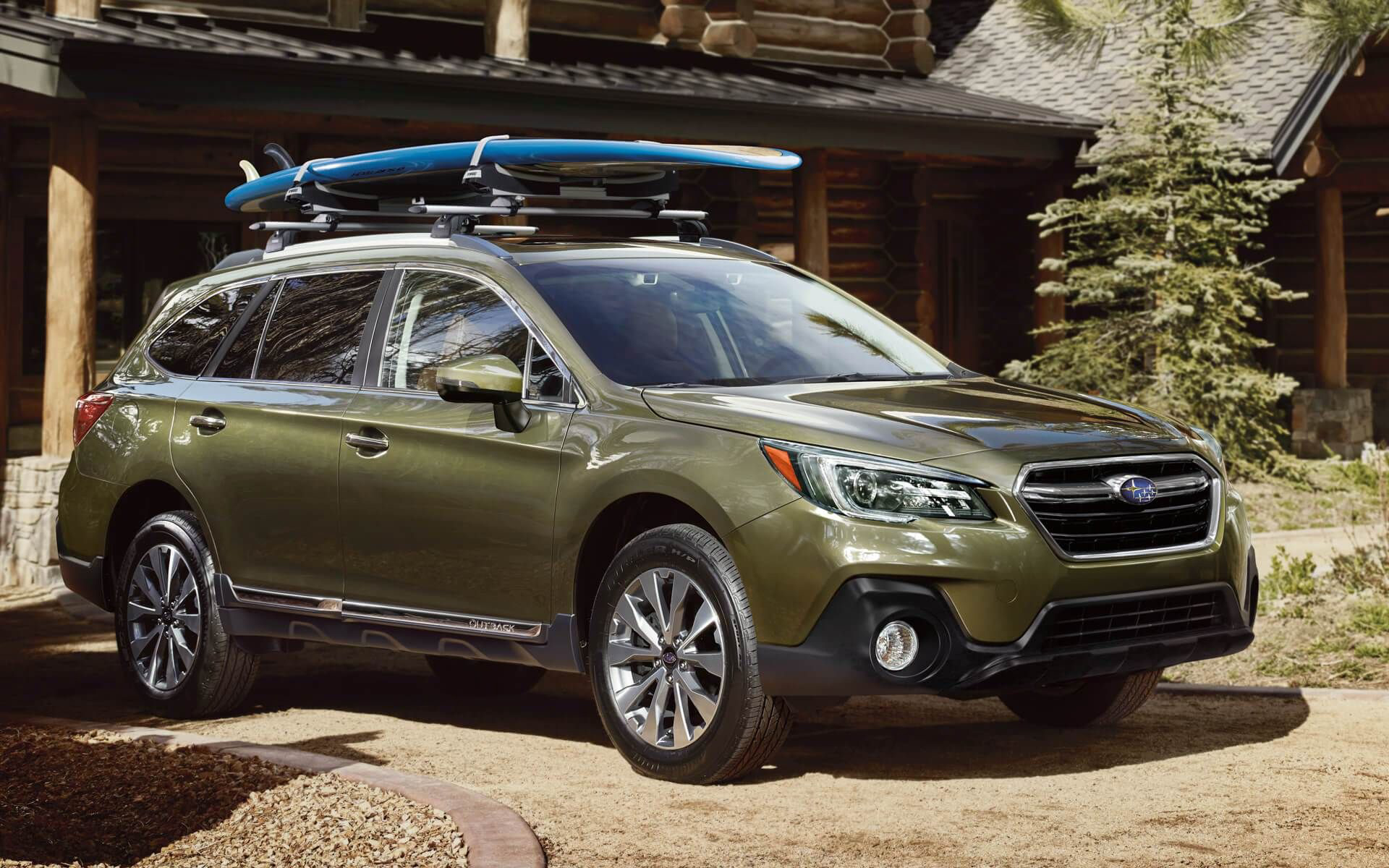
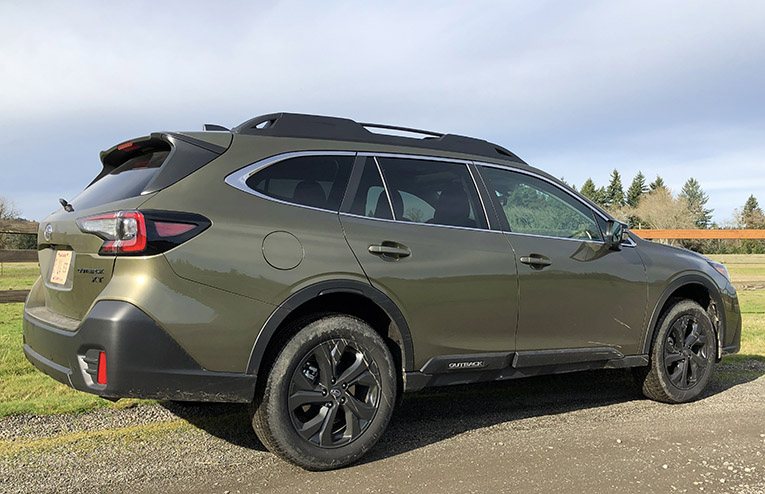
Outback projects a large presence from thicker profile panel surfaces and raised rear gate as well as a sense of speed from its dynamic silhouette. Wider fenders, large hexagonal grille, front cladding and LED fog lights on the corners emphasize Outback’s capability. Side cladding, meant to resemble a hiking boot, further enhances this concept.
The new Outback is slightly larger than last year, gaining 1.4 inches in length to 191.3 inches; gaining 0.6 inches in width to 73.0 inches; remaining at 66.1 inches in height and keeping its 108.1-inch wheelbase. Ground clearance remains 8.7 inches and the Outback gains about 10 lbs. with a curbweight ranging from 3634 pounds to 3772 for the base models depending on trim. The XT models go from 3884 lbs. to 3937 lbs.
The interior design uses a widened windshield and long lines from the center of the instrument panel to the door panels to create an open environment. The Outback Touring leverages luxurious appointments inside and out, including Nappa leather, high-gloss black molding for the pillars, chrome plating decorated door handles and satin tone plated side mirrors.
Comfortable inside with seating for five, interior sightlines are unimpeded, and roominess abounds, though headroom has tightened a bit to 40.1 inches in front (diminished by 0.7 inches), and 39.1 inches for passengers in row two; 42.8 inches of first-row legroom and 39.5 inches for second-row passengers, and shoulder room of 58.1 and 57.4. Cargo volume is 75.7 cu.ft. with seats folded .
The Outback line-up offers two engine choices. For the first time since 2009, the Outback lineup offers a turbocharged engine, the 2.4-liter turbocharged BOXER engine, standard on XT trim models. It delivers robust all-around performance with 260 horsepower and 277 lb-ft of torque, with an EPA rating of 23/city, 30/hwy and 26/combined mileage. Meanwhile, the standard naturally aspirated 2.5-liter BOXER with direct injection delivers 182 hp and 176 lb-ft of torque, for an EPA estimate of 26/33/29. My test ride, the Outback XT Limited, sported the turbo, and I averaged 24.9mpg during my pedal-mashing tests.
Paired with a Lineartronic CVT featuring an 8-speed manual mode function with steering wheel paddle shifters, my Outback accelerated responsively and smooth for the niche, and passing at speed is predictable. From a stop, my test Outback XT Limited completed a niche-quick zero-to-60mph dash in 6.4 seconds during a 14.8-second quarter-mile.
Outback has been a crash safety and passive safety leader for years and that level is reached again for 2020. Outback is equipped with the EyeSight® Driver-Assist Technology crash prevention system, High Beam Assist, DriverFocus™ Distraction Mitigation System, Blind-Spot Detection with Lane Change Assist and Rear Cross-Traffic Alert, Reverse Automatic Braking, Traction Control, Brake Assist, Brake Override System, RearVision Camera, Subaru advanced frontal airbag system , side curtain airbags, seat-mounted front side impact bags, front passenger seat cushion airbag, driver’s knee airbag and lots more.
The base 2020 Outback with the 2.5-liter Boxer engine is priced at $26,645 and runs through four trims, topping at the Touring at $37,345. The XT version with the 2.4-liter turbo has three trims: the Onyx Edition XT ($34,895), Limited XT ($37,745) and Touring XT ($39,645). My test Outback XT Limited in Autumn Green Metallic, with a Slate Black Leather interior, and as mentioned above, the XT Limited is loaded, so much so that no optional packages are offered. Other options were available, but all my test ride added was a Moonroof Air Deflector for $99.99, Remote Engine Starter for $463, Body Side Molding for $292, Door Edge Guards for $168 and splash guards for $172. With destination and delivery charges of $1010, the sticker-as-tested was $39,949.
> Visit www.CarlisleEvents.com for more on the automotive hobby.
Mike Blake, former editor of KIT CAR magazine, joined Carlisle Events as senior automotive journalist in 2004. He's been a "car guy" since the 1960s and has been writing professionally for about 30 years. </I>
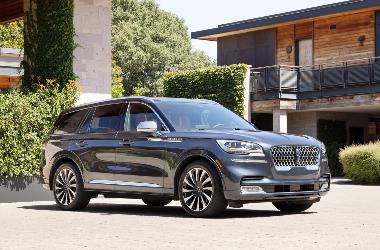
Originally produced from 2003 through 2005 as a rebadged version of the Mercury Mountaineer, the Lincoln Aviator is back for its second generation …
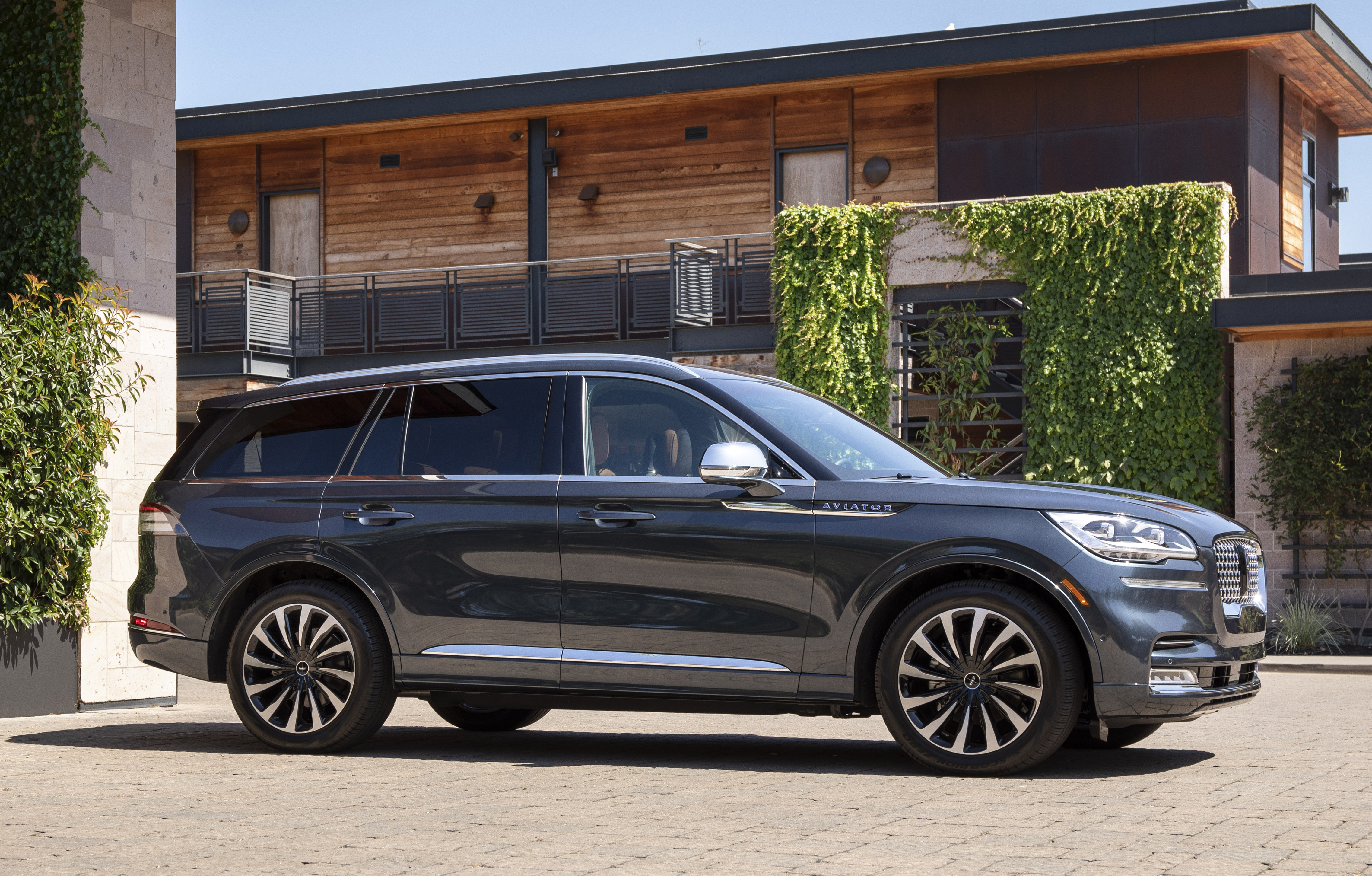
Originally produced from 2003 through 2005 as a rebadged version of the Mercury Mountaineer, the Lincoln Aviator is back for its second generation as a mid-size five-door, three row luxury SUV.
The all-new Aviator is based on the Ford Explorer but this is more than a rebadge. Aviator has its own upscale styling, sculpting, engine, chassis makeup and tech. In addition, its attention to luxury sets Aviator apart from any of its kin.
The all-new 2020 Lincoln Aviator is missioned with combining beauty, performance and advanced technology, and debuting an electrified hybrid system. With a gas-powered 400hp /415 lb-ft of torque engine and a plug-in hybrid system that provides 494hp and best-in-class 630 combined lb-ft of torque, Aviator is built for power and capability joining with sleek elegance and intuitive technology.
Delivering what Lincoln calls “Quiet Flight,” Aviator offers those two powertrains – a standard twin-turbocharged 3.0-liter V6 gas engine and the Grand Touring’s hybrid powertrain. This marks the first time Lincoln has combined a twin-turbocharged 3.0-liter V6 engine and advanced electrified hybrid technology capable of delivering smooth performance and quick-acting torque.
On the outside, Lincoln plays off the Aviator name with a look, marketed with a sky-driven approach: “The boundless allure of flight has long inspired automotive design, and the exterior styling of the all-new Lincoln Aviator takes that inspiration to the next level. The connotations of flight are intrinsic in the strong front and tapering rear of the vehicle, creating a distinct aerofoil analogy,” according to Lincoln’s pitch. Exterior dimensions are 199.3 inches in length, a wind-attracting 69.6 inches in height and 82.3 inches in width on a 119.1-inch wheelbase, for a curb weight of from 4774 to 5673 lbs. depending on trim level and configuration. My Reserve trim weighed about 5000 lbs.
Inside, Aviator is packed with luxury appointments and comfort, a 14-speaker audio system with voice-activated touch-screen navigation system, three rows of seating, available concert hall sound, intuitive tech and function and a quiet environment of quality. Spacewise, you get 41 inches of front headroom (40.2 with a Vista Roof), 39.7 inches in row two and a tight 36.9 inches in row three. Aviator provides 43 inches of front legroom, with 40.1 in the middle and a child-only 29.2 inches in the rear seats; and 61.5 inches of front shoulder room with 61.3 in row two and 54.0 in row three.
Cabin climate is attended to by a Particulate Air Filter Tri-Zone Climate Control, with second row climate controls (with Audio and Heated/Vented Seat Controls when equipped). You also get a 10.1-inch LCD touch-screen in the center-stack, Ambient interior lighting, delayed Accessory Lighting in the first row, Lincoln Connect™ with 4G embedded modem with WiFi® hot spot capability, that enables Lincoln Way™ App remote features (when activated) and so much more we can’t do justice to listing them here.
Aviator is quiet and stable in both Front-wheel-drive and Intelligent All-wheel-drive configurations. My test Aviator Reserve in AWD was outfitted with the twin-turbocharged 3.0-liter V6 Engine with Stop-Start Technology. EPA rated at 27mpg/highway, 20mpg/city and 24mpg/combined, my short test came in at 22.1mpg. With the hybrid option, Aviator Grand Touring’s twin-turbocharged engine and advanced electrified technology lags a bit but you get impressive mileage and 20 extra miles when all-electric.
My 400hp plant was decisive, quick and seamless, and we powered through a zero-to-60mph sprint in 6-seconds-flat, during a 14.7-second (hand-timed) quarter-mile. On the highway, Aviator is quiet and steady with more than enough power to pass with nary a lag. The cushioned ride from the adaptive suspension is worthy of the price tag and Lincoln’s status as a luxury carmaker, and the 4-Wheel Disc Anti-Lock Braking System stops with authority when called upon. Aviator’s Electric Power-Assisted Steering is predictable and while there is some top-wobble during quick maneuvers, Aviator is confident in turns.
Safetywise, first, second and third row Blind Spot Detection with Cross-Traffic Alert begins the safety system, enhanced by Driver and Front Passenger Dual Stage, Side Impact, and Glove-Box-Door Integrated Knee Airbags. The Safety Canopy/Air Curtain (3-rows) with roll-over sensor adds to security as do Vehicle Inclination Sensor Remote, Keyless Entry SecuriCode™ (Keypad), SecuriLock® Passive Anti-Theft System, SOS Post-Crash Alert, Tire Pressure Monitoring System and Emergency Brake Assist Four-Way Adjustable Head Restraints.
The 2020 Lincoln Aviator is priced as a luxury vehicle, starting at $51,100 for the base Standard trim. The Reserve trim is next at $56,190, upgrading with 20-inch wheels, quad-zone climate control, optional packages including Lincoln Co-Pilot360™ Plus and more. The Aviator Grand Touring offers the rechargeable electric hybrid powertrain added to the standard Twin-Turbocharged engine, and keeps Reserve’s features, at $68,800. The top-trim Aviator Black Label starts at $77,695 with special themes, interior finishes and exclusive member service items. My Reserve in Infinite Black with an Ebony leather interior, upticked to All-Wheel-Drive for $2520, and added the $4930 Reserve 1 interior package for the Panoramic Vista Roof® with Power Sun Shade, the Elements Package and the Lincoln Co-Pilot360™ Plus Package. With Destination charges of $1095 and an Acquisition Fee of $645, my sticker came to $64,870, but available incentives of up to $800 may be available, so check with your dealer.
> Visit www.CarlisleEvents.com for more on the automotive hobby.
Mike Blake, former editor of KIT CAR magazine, joined Carlisle Events as senior automotive journalist in 2004. He's been a "car guy" since the 1960s and has been writing professionally for about 30 years. </I>
During the week of April 20, Pennsylvania Governor Tom Wolf announced initial steps to “re-open” the Keystone State. While many aspects of th …
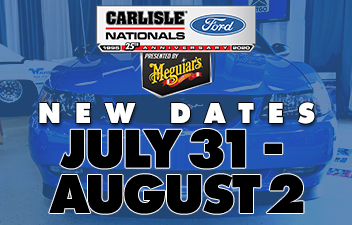
During the week of April 20, Pennsylvania Governor Tom Wolf announced initial steps to “re-open” the Keystone State. While many aspects of the outlined measures offer an optimistic outlook for the coming weeks and months to Pennsylvanians, it also presents a potential timing conflict for events that host large-scale gatherings.
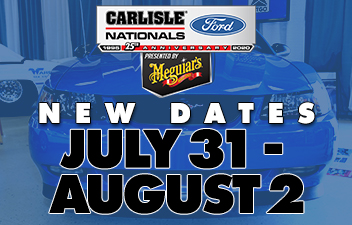
With this new information and out of a continued abundance of caution for the Carlisle community, Carlisle Events staff and Carlisle Ford Nationals attendees, the 2020 Carlisle Ford Nationals presented by Meguiar’s has been RESCHEDULED. The original dates were June 5-7, with the NEW DATES now occurring July 31-August 2, still at the Carlisle PA Fairgrounds.
The new July 31-August 2 dates offer guests even more time to enjoy the biggest and best all-Ford event of its type. Nearly one month into the official start of summer, days will be longer, with historically sun-shiny skies blanketing the facility and the decades of Ford branded vehicles. It’ll also offer a unique atmosphere on Saturday night, August 1 as hundreds of Fords roll into downtown Carlisle for the Downtown Carlisle Association’s Ford Parade and Street Party.
Though the event has changed dates, themes and displays are still on as planned. This includes the annual Ford Nationals Select display, a 50th celebration of the Grabber, the 15th Anniversary of the Ford GT, a Euro Ford Garage that highlights the 50th of the Capri and 35th of the Merkur, a Thunderbird celebration and one focused on the Starliner too. Guests and certain other entertainment aspects of the event are being reviewed at this time, with any possible changes, updates or cancellations being shared via the Carlisle Ford Nationals web channels, including CarlisleEvents.com and the event’s Facebook page in the coming days/weeks.
As with any rescheduled event, all original tickets, car corral spaces, vending or National Parts Depot Showfield spaces will be honored.
“As a community and region, we are making progress, working with one common goal; that being to flatten the curve,” noted Carlisle Events co-owner Bill Miller. “Progress is such that our state’s governor has shared a plan to re-open the state and its economy. With that plan in place, we recognize the need for just a little bit more time before hosting large-scale events in Carlisle. As such, we have decided to reschedule this year’s Ford Nationals from June to July,” continued Miller. “We are getting there, and we are looking forward to seeing everyone in Carlisle this summer and beyond for our great events.”
During this event, as well as others on the schedule, Carlisle Events will continue to be proactive from a health and sanitation standpoint within the Carlisle PA Fairgrounds and Carlisle Expo Center.
For details regarding the NEW Carlisle Ford Nationals dates July 31-August 2, visit CarlisleEvents.com or call 717-243-7855.
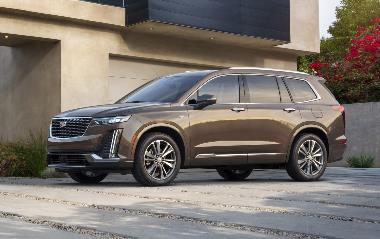
Cadillac has expanded its crossover and SUV lineup with the 2020 XT6. The alphanumeric name is Cadillac-speak for Crossover Touring 6, and is the l …
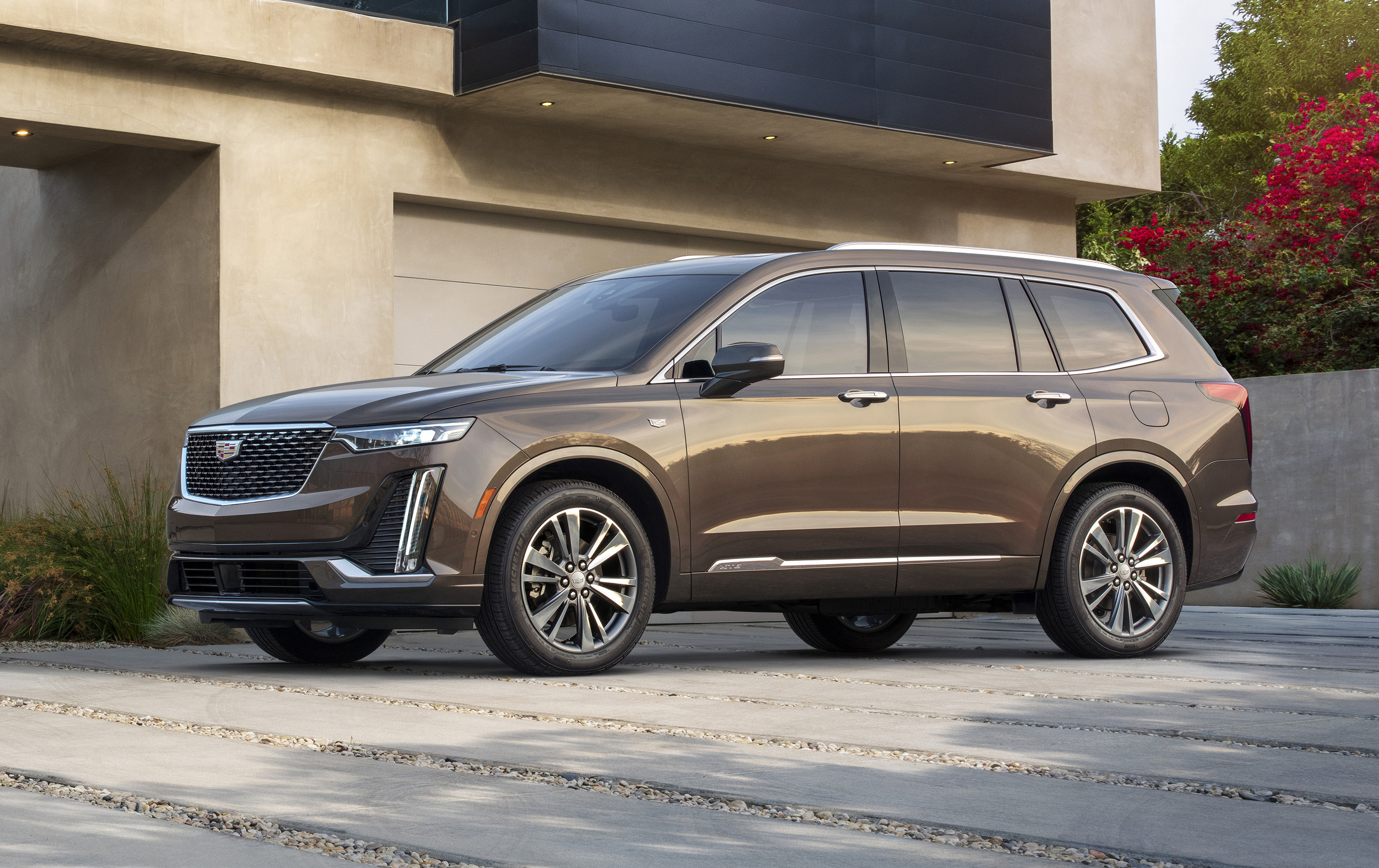
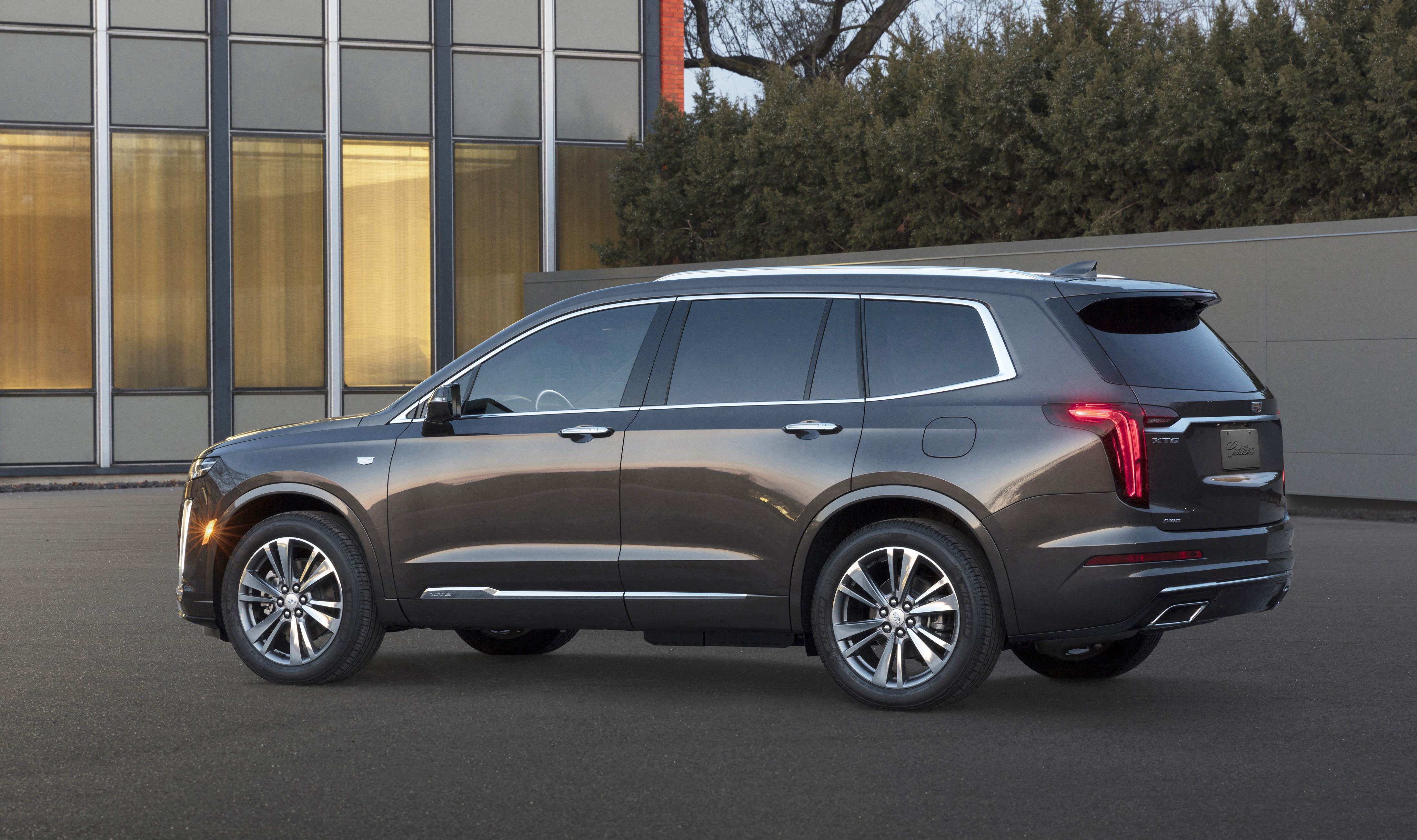
Cadillac has expanded its crossover and SUV lineup with the 2020 XT6. The alphanumeric name is Cadillac-speak for Crossover Touring 6, and is the largest of the XT series, slotted as a mid-size, between Cadillac’s XT5 and the full-size Escalade. Produced in GM’s Spring Hill, TN plant, the XT6 shares its wheelbase with the GMC Acadia, Cadillac XT5 and Chevrolet Blazer and sits on the same platform as the Buick Enclave.
With Cadillac marketing it as a “mid-size-plus,” the all-new three-row family crossover centers on a luxurious, adaptable and connected cabin complemented by responsive handling and a comprehensive suite of standard and available safety technologies.
Marketed in two trim levels – “Premium Luxury”, and “Sport” – XT6’s seating configuration was intended to feature six seats, but made that an option, as its standard is as a seven-seater, so perhaps it should be renamed XT7?
Caddy-loaded, the 2020 XT6 offers a comprehensive suite of standard and available driver assistance and safety technologies, along with generous cargo capacity. XT6 is outfitted with the latest Cadillac user-experience items featuring intuitive controls including a rotary controller with new jog functionality. Additionally, the vehicle’s 9-speed automatic transmission offers four selectable driving modes, and both the Premium Luxury and Sport models offer customers available customized looks with unique exterior and interior distinction.
Outside, XT6 carries Cadillac’s general boxiness and big windows for good visibility. XT6 is a wind-attracter that measures 70.2 inches in height, 77.3 inches in width and 198.8 inches in length on a 112.7-inch wheelbase. Curb weight goes from 44431 lbs. to 4690 lbs. depending on trim and drive configuration, and XT6 can trailer 4000 lbs.
Inside, XT6 advances Cadillac’s contemporary interior aesthetic, with elegant, wide surface lines and simple interfaces, though it is not as luxurious as the Escalade. Distinctive trim and interior colors delineate the Premium Luxury and Sport models. Premium Luxury models are trimmed with exotic wood decor, while the Sport features performance-inspired carbon fiber trim.
Available comfort features help ensure that all passengers have a luxurious experience in every seating row, including Cadillac’s first Bose® Performance Series sound system with 14 custom-tuned speakers delivering immersive, powerful audio throughout the cabin. Additional available features include semi-aniline premium leather-appointed seating; Cadillac’s in-vehicle air ionizer; automatic heated/ventilated front seats and heated second-row rear outboard seats, and a standard automatic heated steering wheel.
Regarding comfort, the XT6 cabin provides only 39.8 inches of front headroom, 39.1 in row two and a child-worthy 37.2 inches in row three. Legroom follows at a good 41.2 in row one, 39.1 in the middle seats and only 29.5 inches in the tight third row. Shoulder room stretches out to 58.3, 57.4 and 53.5, but hip room gets really snug in row three with only 39.5 inches, after 56.1 in front and 55.7 in the middle seats.
XT6 power comes from a 3.6-liter V-6 direct-injection VVT engine with auto stop/start. Mated to a nine-speed automatic transmission, the system delivers 310hp and 271 lb-ft of torque. In Front-Wheel-Drive, the engine is rated at 18mpg/city and 25mpg/highway, and in All-Wheel-Drive, the EPS estimate is 17/24. I averaged 22.4mpg in the Premium All-Wheel-Drive trim, during my limited tests due to essential business restrictions.
The quiet cabin remains so even when accelerating with ease while passing, and handling is similar to that of a smaller vehicle. The ride is cushioned well and smoothes out road irregularities, but steering is vague and times, and severe turns result in noticeable body waver.
While passing is powerful, track tests were slow, but steady, with a hand-timed 7.3-second zero-to-60mph sprint and a 15.7-second quarter-mile.
From a safety perspective, the National Highway Traffic Safety Administration has given the XT6 a five-star rating and the Insurance Institute for Highway Safety named it a Top Safety Pick+, that agency's highest honor. A host of driver-assistance features are available. Automated emergency braking, lane-keeping assist, and blind-spot monitoring are standard, while more advanced features such as adaptive cruise control and night vision are available as options.
The 2020 Cadillac XT6 in Premium Luxury trim starts at $52,315 in FWD and $54,315 in AWD, and the Sport trim starts at $56,715 in AWD (only) with a few cosmetic and other minor additions. My test Premium Luxury XT6 in AWD added Dark Mocha Metallic paint for $625. Adding Maple Sugar Semi-Analine Leather Seating surfaces was part of a huge package add-on including the Platinum Package ($4900), the Enhanced Visibility and Technology Package ($2350), the Driver Assist Package ($1300) and the Comfort and Air Quality Package ($750), Cadillac User Experience with Navigation ($1000) and Premium headlamps ($800), among others, that upped the ante a whopping $11,175 for Reverse Automatic Braking, Enhanced Visibility and Technology Package, Platinum Package, Ventilated driver and front passenger seats, Rear Camera Mirror with washer, Enhanced Automatic Emergency Braking, Comfort and Air Quality Package, Bose® Performance Series 14-speaker audio system, 8-inch diagonal color Driver Information Center, Head-Up Display, Driver Assist Package, and tons more.
Assist steps added $750 and destination charges of $995 put the sticker-as-tested at $68,240, but discounts and cash allowances could exceed $2000, so check with your local dealer.
> Visit www.CarlisleEvents.com for more on the automotive hobby.
Mike Blake, former editor of KIT CAR magazine, joined Carlisle Events as senior automotive journalist in 2004. He's been a "car guy" since the 1960s and has been writing professionally for about 30 years. </I>
Once thought of as a “Baby Explorer” when it debuted in 2001, the Ford Escape made the small SUV segment its own, and soon developed its own follow …
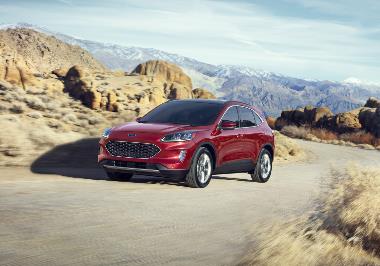
Once thought of as a “Baby Explorer” when it debuted in 2001, the Ford Escape made the small SUV segment its own, and soon developed its own following, personality, utility, look and feel. The 13th top-selling vehicle in 2019, Escape is Ford’s No.2-best-selling vehicle, behind only the F-Series.
For 2020, Escape, has been redesigned for its fourth generation, and brings back a hybrid model, after a seven-year hiatus.
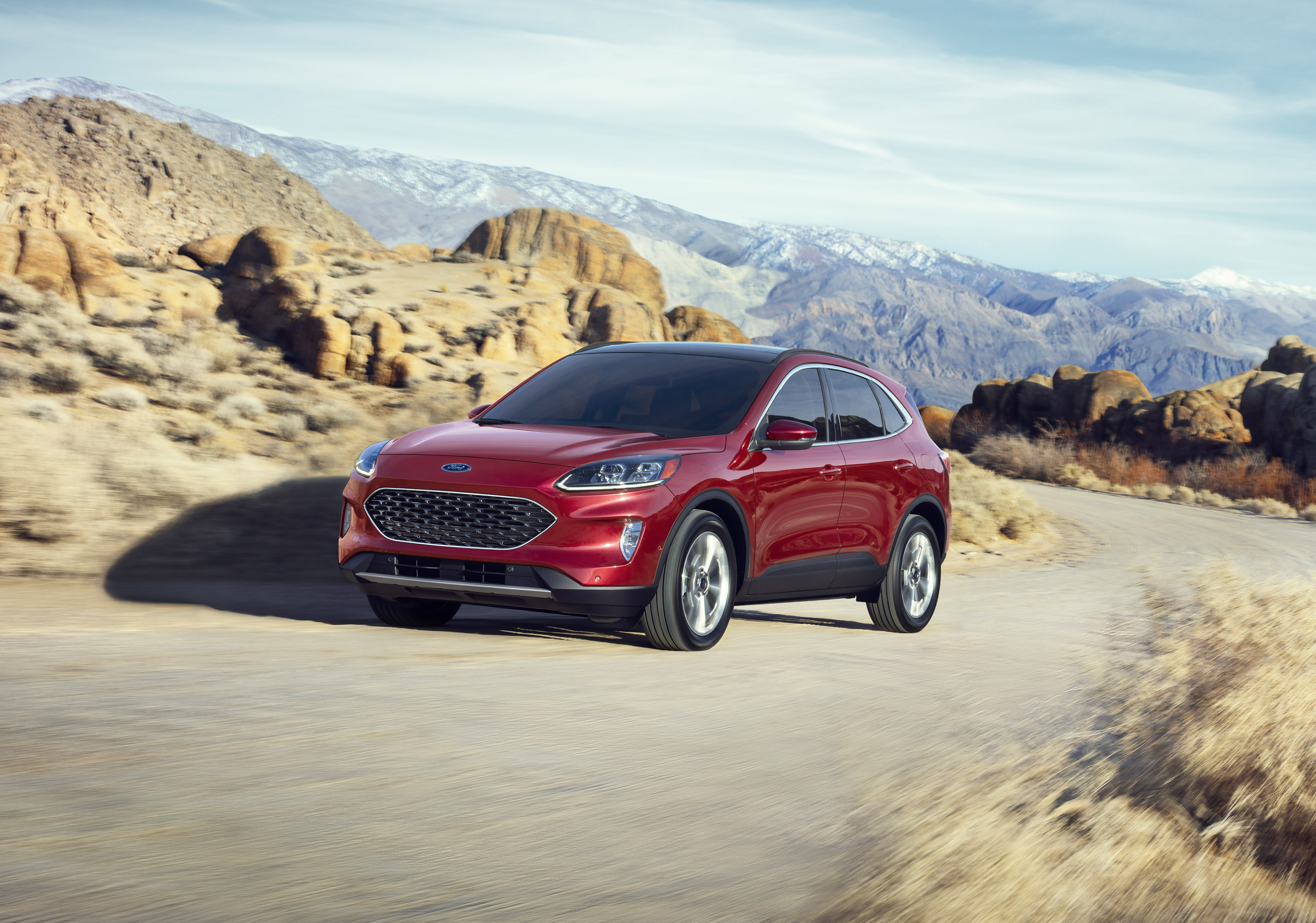
The 2020 Ford Escape is all-new with an aerodynamic design stemming from a sloped roofline, optimized liftgate spoiler and efficient underbody. Two hundred pounds lighter than the previous incarnation, due in part to the extensive use of high-strength, lightweight steel, Escape gains power, fuel efficiency and sportiness across all of its five trim levels. The 2020 edition offers four powertrains, including a standard hybrid and a plug-in variant, and introduces technologies ranging from drive modes and driver-assist features to electric vehicle ingenuity and on-board connectivity. Escape introduces new sliding second-row seats for 2020 that enable best-in-class second-row legroom and as much as 37.5 cubic feet of cargo space. And Ford’s smartest-ever small SUV features new selectable drive modes and Ford Co-Pilot360™ driver-assist technology. Available features include a 12.3-inch all-digital instrument cluster, a first-for-Ford in North America heads-up display and its first-in-class driver-assist features Active Park Assist 2.0 and Evasive Steering Assist.
The new Escape’s architecture goes for sportiness, borrowing its shield-shaped trapezoidal grille from a similar sixth-generation Mustang inspiration, while the lower front end pays homage to Ford GT. Compared to the previous model, the all-new Escape stands lower, wider and longer.
The 2020 Escape continues in its compact crossover footprint though this year’s generation gains 2.4 inches in length to 180.5. Escape measures 66.1 inches in height (0.2 inches lower) and 74.1 inches in width (a gain of 1.7 inches), on a 106.7-inch wheelbase – up 0.8 inches. Minimum running ground clearance is 7.9 inches and Escape has a curb weight range of 3298 lbs. to 3884 lbs. depending on trim and drive configuration.
Performance upgrades help make Escape a fun-to-drive sports-ute, with both its gas engine-powered models and the standard hybrid available with all-wheel drive. EcoBoost-equipped models get a new quick-shifting 8-speed automatic transmission for smooth, responsive shifting, while every Escape receives an all-new suspension and improved dynamics with a new isolated rear subframe.
Available in either Front-Wheel-Drive or Intelligent 4WD, Escape’s engine choices include the naturally aspirated 2.5-liter FHEV iVCT inline-4 engine that delivers 198hp and 170 lbs-ft of torque with sequential multiport electronic fuel injection and the 2.5-liter PHEV that gives you 209hp. The standard hybrid targets best-in-class EPA-estimated range of more than 550 miles and the plug-in hybrid targets a best-in-class EPA-estimated pure-electric range of 30-plus miles. For gas-engine devotees, a direct-injection 1.5-liter EcoBoost® I-4 with Auto Start-Stop returns, rated at 180hp, with 177-lbs-ft of torque and a EPA estimate of 26mpg/city, 31mpg/highway and 28mpg/combined. The other option, a turbocharged direct injection 2.0-liter Twin-Scroll EcoBoost® inline-4 with Auto Start-Stop also returns this year, supplying 250hp and 275 lbs-ft of torque on premium fuel, with EPA estimates of 22/28/24. I drove the 1.5-liter and averaged 28.6mpg in mixed-use tests. My weeklong test included some interstate trips, in-town maneuvers and one soft-road test, and I found the system to provide just enough power to pass when asked, and to conquer uphill grades sufficiently. A track test showed a steady 7.7-second zero-to-60mpg sprint and a 16-second-flat quarter-mile. My small SUV showed carlike steering, balance and an family driving and passenger experience.
Inside, the cabin is well-appointed with seating for five. Accommodations are tight for taller drivers, as headroom measures 40.0 inches in front and 39.3 in row two. Legroom can be stretched to a maximum of 42.4 inches in row one, while second-row passengers have 38.9 inches. Shoulder room is 57.6 in row one and 56.0 for row two, representing small gains in shoulder and legroom.
The 2020 Ford Escape is available in five trims. The S trim starts at $24,885 with the 1.5-liter I-4 EcoBoost® engine and Sync® with 4.2-inch LCD Screen Display; the SE that I tested, starts at $27,105 with the 1.5-liter EcoBoost® and adding SYNC® 3 with 8-inch LCD Screen Display, 10-Way Power Driver with Heated Front Row, Intelligent Access with Push Button Start and more; the SE Sport Hybrid starts at $28,265 with the 2.5L iVCT Atkinson Cycle I-4 Hybrid Engine and more; the SEL trim starts at $29,265 with the 1.5, reverse sensing and a power liftgate; and the Titanium trim started at $33,550 in FWD with the 2.5-liter Hybrid, 10-Speaker Audio System and more.
My Escape SE added Rapid Red exterior paint for $395. Upgrading from FWD to all-wheel-drive added $1500; Ford Co-Pilot Assist™ added $695 for Adaptive Cruise Control with Stop-and-Go, Voice-Activated Touchscreen Navigation System with Pinch-to-Zoom Capability, and SiriusXM Traffic and Travel Link®. Splash guards added $210; a Panoramic Vista Roof added $1495 and Destination Charges of $1245 plus an Acquisition fee of $645, put the sticker-as-tested at $33,390, but incentives of $1625 and other discounts are available, so check with your dealer.
> Visit www.CarlisleEvents.com for more on the automotive hobby.
Mike Blake, former editor of KIT CAR magazine, joined Carlisle Events as senior automotive journalist in 2004. He's been a "car guy" since the 1960s and has been writing professionally for about 30 years. </I>
Book online or call (800) 216-1876